


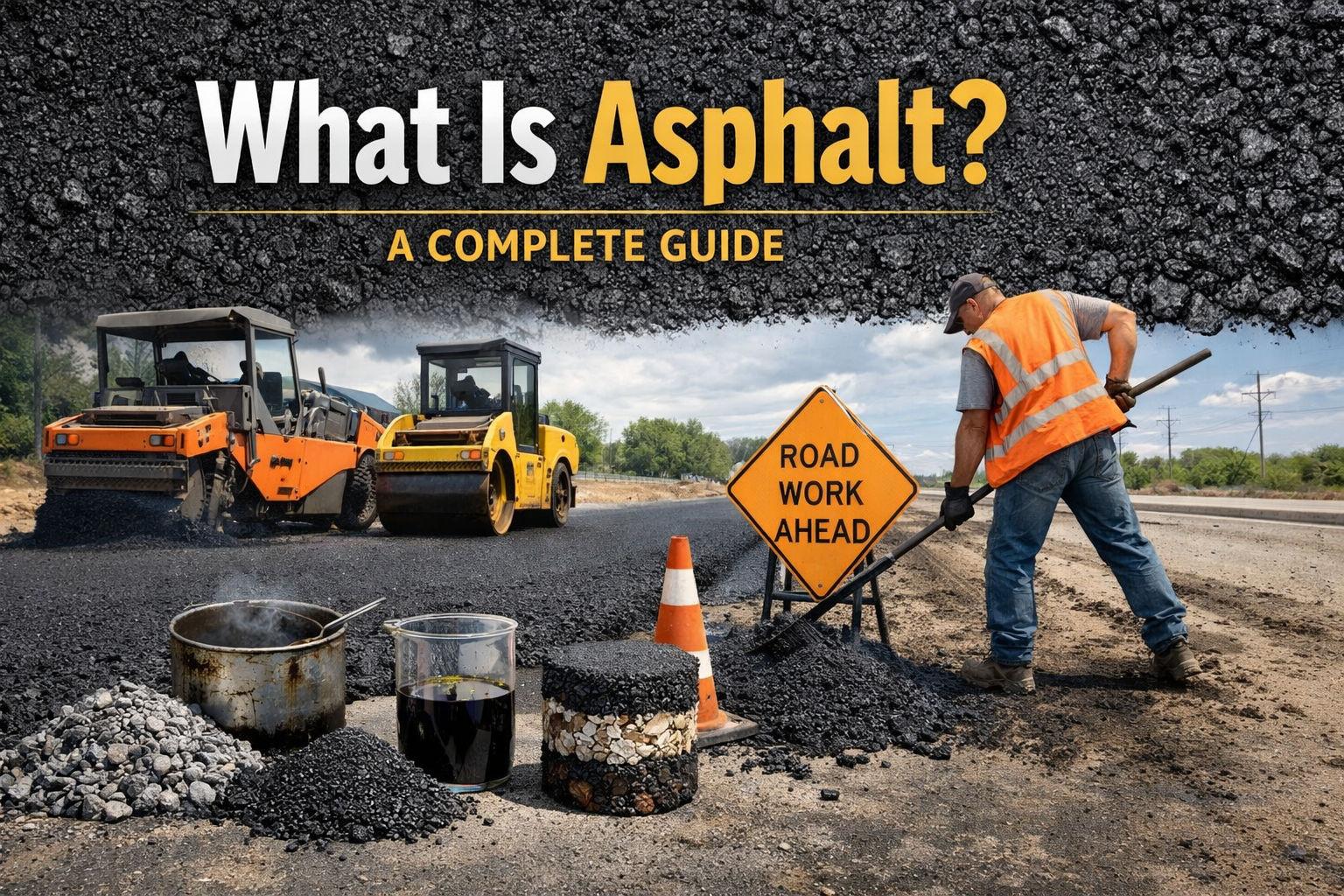
 If you have spent any time on a job site, you already know asphalt. You have probably walked on it, driven on it, and maybe even laid it yourself. But understanding what asphalt actually is, how it is made, and why it outperforms most alternatives can sharpen how you spec materials, manage projects, and talk to clients. This guide breaks it all down.
What Is Asphalt?
Asphalt is a composite construction material made up of three main components: aggregates, a binder, and filler. Aggregates are typically crushed rock, sand, gravel, or slag. The binder, most commonly bitumen, holds everything together into a cohesive, load-bearing surface.
Bitumen itself is a by-product of crude oil distillation. It is thick, viscous, and waterproof, which makes it perfect for binding road materials that take daily punishment from traffic, weather, and temperature swings.
Asphalt is sometimes called bituminous concrete or, colloquially, tarmac. It is the dominant road surfacing material in the UK (covering over 95% of roads), across Europe, and in much of the world.
What Is Asphalt Made Of?
The recipe for asphalt is straightforward, but each ingredient plays a specific role:
• Aggregates (75-85% by weight): crushed stone, sand, gravel, or recycled materials like construction and demolition debris
• Bitumen binder (4-7% by weight): derived from heavy crude oil; provides waterproofing and cohesion
• Filler: fine particles like limestone dust that fill voids and improve stiffness
The mix design is adjusted depending on the application. A high-speed motorway surface needs different properties than a quiet residential car park. Getting the proportions right is where the real engineering happens.
How Is Asphalt Produced?
Asphalt is manufactured in an asphalt plant, either fixed or mobile. Modern plants can produce up to 800 tonnes per hour, which tells you something about the scale of infrastructure demand.
The production process in brief: aggregates are dried and heated, then mixed with the bitumen binder at a precisely controlled temperature to produce a uniform mixture. That mixture is then transported to site in insulated trucks and laid while still workable.
Temperature control during production is everything. Too cold and the mix becomes stiff and unworkable. Too hot and the binder degrades. Hitting the right window is what separates a durable pavement from one that cracks within a few years.
The Different Types of Asphalt: Choosing the Right Mix
Not all asphalt is the same. The mix you choose needs to match the job. Here are the three main categories used in the UK and across most of Europe:
Asphalt Concretes (AC)
The most widely used type. Aggregates are continuously graded to create a tight, interlocking structure bound with bitumen. Great for roads, car parks, and heavy-use surfaces where stiffness and durability matter most.
Stone Mastic Asphalt (SMA)
A gap-graded mix with a high content of coarse aggregate forming a stone skeleton. SMA delivers excellent resistance to rutting and deformation, which is why you will often see it specified on busy arterial roads and motorways.
Hot Rolled Asphalt (HRA)
Dense and gap-graded, HRA relies on a mortar of fine aggregate, filler, and high-viscosity binder for its strength. Pre-coated chippings are often rolled in to the surface to improve skid resistance.
Beyond mix type, asphalt can also be produced at different temperatures, which affects both sustainability and performance.
Hot Mix, Warm Mix, Cold Mix: What Is the Difference?
Hot Mix Asphalt (HMA)
The traditional standard, produced at 140 to 190 degrees Celsius. It delivers consistent strength and is suitable for most applications, from base courses to wearing surfaces.
Warm Mix Asphalt (WMA)
Produced at 20 to 40 degrees lower than HMA. Less energy is consumed during manufacturing, and emissions are significantly reduced. As a rough guide, a 25-degree reduction in temperature cuts fume emissions by around 75%. Crews also benefit from lower on-site temperatures and earlier road opening times.
Cold Mix Asphalt (CMA)
Made without heating the aggregate at all. Instead, bitumen is emulsified in water, which breaks down during mixing or compaction. Water then evaporates over a curing period and strength builds up gradually. Cold mix is ideal for patching, maintenance, and lightly trafficked roads where mobilising a full hot-mix operation is not practical.
Understanding the Different Asphalt Layers
A finished asphalt pavement is not just one layer of material. It is a carefully engineered stack, each layer doing a specific job:
Surface Course (Wearing Course)
The top layer, typically 25 to 50mm thick. This is what tyres, feet, and the weather interact with directly. It needs to resist cracking and rutting, provide grip, manage drainage, and sometimes reduce noise. The surface course also takes the most maintenance over a road's life.
Binder Course
Sitting between the surface and base, the binder course (approximately 50 to 90mm thick) distributes the load from the surface down into the base below. It also acts as a levelling layer to correct any irregularities before the wearing course goes on. Shear stress peaks here, so mix selection is critical.
Base Course
The structural backbone of the pavement. It handles the bulk of the traffic loading and spreads stress so the subgrade below is not overwhelmed. Stiffness and fatigue resistance are the main design criteria at this level.
Subbase and Formation
Below the bound asphalt layers sit unbound layers of aggregate and the natural subgrade. These provide drainage and a stable platform. Their bearing capacity directly affects how well the whole pavement performs over time.
Why Is Asphalt the Go-To Material for Road Construction?
Given how many construction materials exist, why does asphalt dominate? A few reasons stand out:
• Cost-effective to construct and maintain across its full life cycle
• Fast to lay and open to traffic, reducing disruption
• Flexible enough to handle slight ground settlements without cracking
• Smooth surface improves fuel efficiency, tyre grip, and driver safety
• Disperses surface water quickly, reducing aquaplaning risk
• Reduces noise pollution compared to many alternatives
• Easy to repair in sections without replacing the entire surface
• Highly recyclable, with reclaimed asphalt pavement (RAP) reused in new mixes
Asphalt vs Tarmac: Is There a Difference?
On most job sites, the words are used interchangeably. Technically, tarmac refers to a historical product that used tar (a by-product of coal processing) as the binder. Since tar was identified as a potential carcinogen, it was phased out of road construction in the late 1980s and early 1990s.
Modern roads use bitumen, not tar. Bitumen comes from crude oil, not coal, and does not carry the same health concerns. So when someone says tarmac today, they almost certainly mean bitumen-bound asphalt. The distinction matters if you are ever discussing material specifications or regulatory compliance with a client.
Asphalt and Sustainability: A Material That Is Catching Up Fast
Asphalt has a better sustainability story than many people realise, and it keeps improving. Reclaimed Asphalt Pavement (RAP) is already standard practice across the industry. Old road surfaces are milled off, crushed, and fed back into new asphalt mixes, cutting the need for virgin aggregates and new bitumen.
Warm mix and cold mix technologies reduce energy consumption during production. Bio-based binders are in active development as a lower-carbon alternative to petroleum-derived bitumen. Some manufacturers have even introduced products that lock biogenic carbon within the asphalt, reducing the net carbon footprint of a project.
For construction professionals facing tighter sustainability requirements on contracts, understanding the environmental credentials of different asphalt types is increasingly valuable.
Practical Tips for Working With Asphalt on Site
Knowing the material is one thing. Getting a good result on the ground is another. A few things worth keeping front of mind:
• Temperature windows are non-negotiable. Check compaction temperature requirements for the specific mix and work within them.
• Surface prep matters. A clean, tacked surface ensures bond between layers. Skipping tack coat is one of the most common causes of delamination.
• Compaction passes need to happen while the mat is still hot. Once the material cools below a certain threshold, you are wasting roller effort.
• Allow full curing before opening to traffic, especially with cold mix applications. Rushing this step causes early surface damage.
• Joint construction is often underestimated. Poorly formed longitudinal joints are a leading cause of water ingress and premature failure.
Common Misconceptions About Asphalt
A few things that come up regularly on site and with clients:
• Asphalt is not the same as concrete. Asphalt is flexible and repairs easily in sections. Concrete is rigid, cheaper on longer time horizons for some applications, but harder and more disruptive to repair.
• Asphalt does not last forever. Even well-laid surfaces need maintenance. Surface dressing, overlays, and patching at regular intervals extend pavement life significantly.
• Darker colour does not mean worse heat absorption. Porous and lighter-coloured surface mixes are available where urban heat island effects are a concern.
• Thicker is not always better. Pavement design is a structural calculation. Over-specifying wastes budget; under-specifying leads to premature failure. Use proper design standards.
Frequently Asked Questions About Asphalt
What is asphalt used for?
Asphalt is used for roads, motorways, car parks, airport runways, cycle lanes, footpaths, sports surfaces (tennis courts, running tracks), driveways, industrial flooring, and roofing materials. Its versatility comes from the ability to adjust the mix for very different load and performance requirements.
What is the difference between asphalt and bitumen?
Bitumen is the binder within asphalt. Asphalt is the finished composite material made up of aggregates, bitumen, and filler. Calling a road surface bitumen is a bit like calling a concrete wall cement. Both terms get used loosely in the industry, but the distinction matters when specifying materials.
How long does asphalt last?
A well-designed and properly maintained asphalt pavement typically lasts 20 to 30 years or more. Surface courses wear faster and may need attention every 10 to 15 years. Base courses, if protected from water ingress, can outlast the surface layers significantly.
Is asphalt recyclable?
Yes, asphalt is one of the most recycled construction materials in the world. Reclaimed Asphalt Pavement (RAP) from milled road surfaces is routinely incorporated into new asphalt mixes at rates of 20% to 50% or higher, reducing material costs and environmental impact.
What is warm mix asphalt and why does it matter?
Warm mix asphalt (WMA) is produced at temperatures 20 to 40 degrees lower than conventional hot mix. It uses less energy, generates fewer emissions, and creates safer working conditions on site. WMA meets the same performance standards as hot mix and is increasingly preferred on contracts with sustainability requirements.