


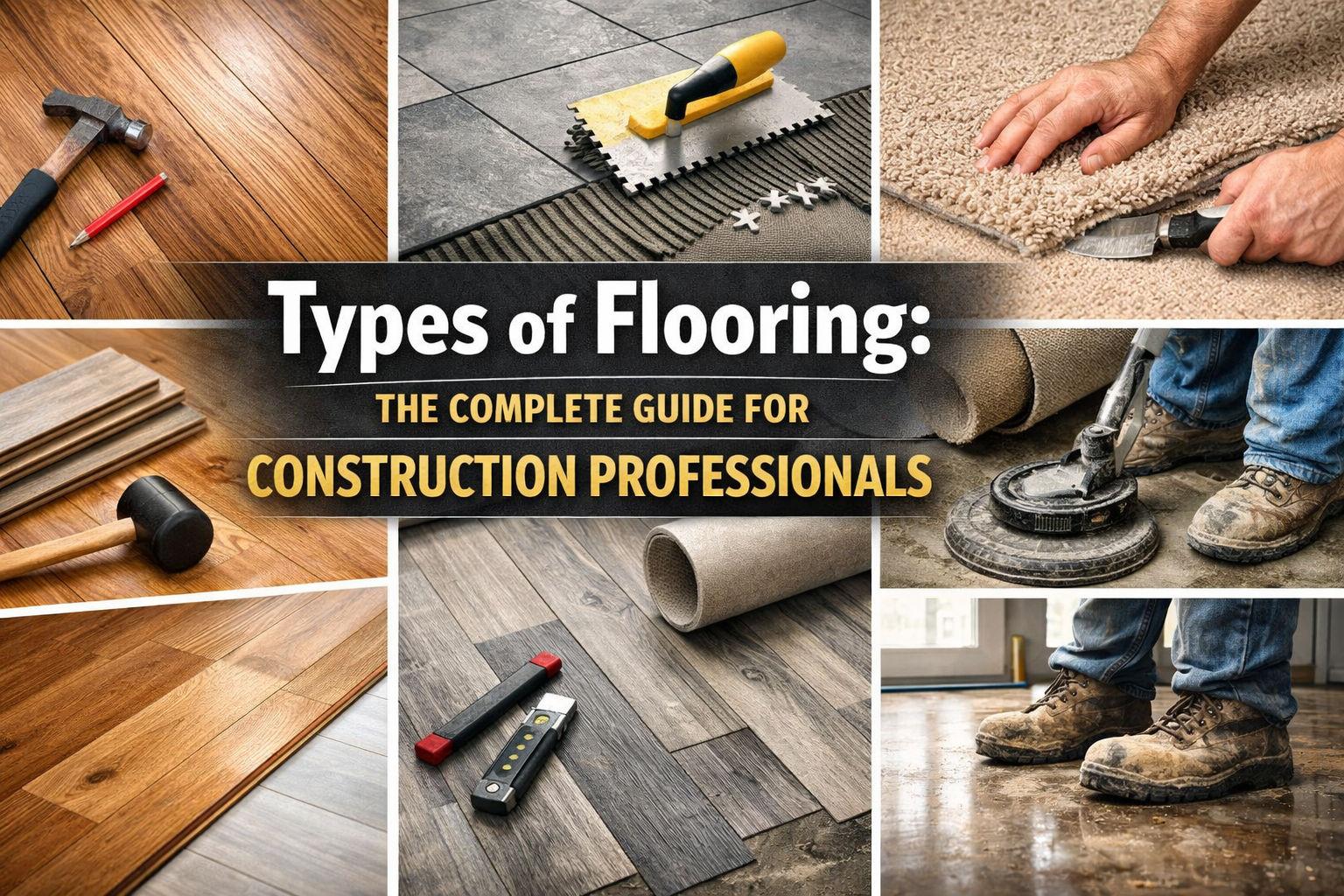
Whether you are building a residential complex, a commercial space, or a high-traffic industrial facility, choosing between the different types of flooring is one of the most important decisions on any project. The wrong choice can mean costly replacements, unhappy clients, and structural problems down the line. Get it right, and you deliver a space that lasts for decades.
This guide breaks down every major flooring type, what each is best suited for, and the practical pros and cons every construction professional needs to know.
Why Flooring Choice Matters in Construction Projects
Flooring is not just a finishing touch. It affects structural load, moisture management, acoustic performance, maintenance costs, and the overall lifespan of a building. As a construction professional, your flooring recommendation carries weight. Clients trust your expertise to match the right material to each room's demands.
The key factors to evaluate before specifying any flooring type are:
• Foot traffic levels (light residential vs. heavy commercial)
• Moisture and humidity exposure
• Subfloor condition and compatibility
• Budget (material cost plus installation)
• Client lifestyle and maintenance preferences
Hardwood Flooring
Hardwood is the gold standard for residential projects where longevity and aesthetics are the priority. It comes in two forms: solid hardwood (milled from a single plank) and engineered hardwood (a real wood veneer over a multi-layer base). Both deliver the classic warmth that clients love.
Solid hardwood can be sanded and refinished up to five times, making it genuinely long-term. Engineered hardwood is more dimensionally stable, which means it handles humidity swings better and works well in kitchens, basements, and regions with extreme seasonal changes.
Best for: Bedrooms, living rooms, dining rooms, luxury residential and high-end commercial spaces.
Vinyl Flooring (LVT and LVP)
Vinyl flooring has come a long way. Luxury Vinyl Tile (LVT) and Luxury Vinyl Plank (LVP) are now among the most specified types of flooring in both residential and light commercial construction. It is 100% waterproof, scratch-resistant, and available in designs that convincingly replicate hardwood and stone.
The wear layer is what separates budget vinyl from commercial-grade vinyl. A thicker wear layer (12 mil and above) is what you want to specify for high-traffic corridors, retail floors, and homes with pets or children. Installation is fast: click-lock systems go directly over most existing subfloors, which saves time on renovation projects.
Best for: Kitchens, bathrooms, hallways, retail spaces, and any moisture-prone area.
Tile Flooring (Ceramic and Porcelain)
Tile remains one of the most reliable types of flooring for wet zones. Ceramic is fired clay and works well in most standard residential applications. Porcelain is fired at a higher temperature, making it denser, less porous, and significantly more durable. For any project involving heavy moisture exposure, porcelain is the safer specification.
Natural stone tiles (granite, marble, slate, travertine) deliver premium aesthetics but require sealing and more careful maintenance protocols. Brief your clients on this upfront to avoid warranty headaches later.
Best for: Bathrooms, kitchens, laundry rooms, basements, and outdoor terraces.
Laminate Flooring
Laminate is the budget-conscious contractor's best friend. It mimics the look of hardwood, stone, or marble at a fraction of the cost and installs quickly with a tongue-and-groove click system. Modern laminate options come with scratch resistance, AC ratings for commercial durability, and waterproof cores.
When specifying laminate, always check the AC (Abrasion Class) rating. AC3 is the minimum for residential use in busy areas. AC4 and above is what you want for light commercial applications like small offices or shops.
Best for: Bedrooms, living rooms, budget residential projects, and light commercial spaces.
Carpet Flooring
Carpet brings warmth, acoustic insulation, and comfort underfoot. It is still the first choice for bedrooms, hospitality suites, conference rooms, and home theatres where sound absorption matters. The main variables are fiber type and pile construction.
Cut pile (including saxony, frieze, and plush) gives a soft, premium feel. Loop pile (berber, level loop) is tougher and handles heavy traffic better. Cut-and-loop combinations offer textured pattern designs popular in commercial office fit-outs.
Best for: Bedrooms, family rooms, hotel rooms, conference rooms, and acoustic-sensitive spaces.
Concrete and Polished Concrete Flooring
Polished concrete is gaining serious traction in modern construction, particularly for industrial facilities, warehouses, showrooms, and minimalist residential projects. It is incredibly strong, requires almost no maintenance, and can be customized with stains, dyes, or epoxy coatings.
For construction professionals, concrete flooring is especially practical in ground-floor slabs where it saves the cost and time of laying a separate finish floor altogether. A good grinding and polishing job can transform a raw slab into a durable, attractive surface.
Best for: Industrial facilities, warehouses, commercial showrooms, garages, and modern loft-style homes.
Rubber and Gym Flooring
This category often gets overlooked in general flooring guides but is essential knowledge for anyone working on gym builds, sports facilities, or commercial kitchens. Rubber flooring resists moisture, blocks sound, absorbs shock, and handles the kind of abuse that would destroy any other material.
It comes in interlocking tiles (ideal for gyms and utility rooms) and rolls (better for large commercial applications). For commercial kitchens, specify anti-fatigue rubber matting in standing zones to reduce worker strain.
Best for: Gyms, sports halls, garages, commercial kitchens, and utility rooms.
Quick Comparison: Types of Flooring at a Glance
Use this as a quick reference when advising clients or preparing project specifications:
| Flooring Type | Cost | Best Use |
|---|---|---|
| Hardwood | High | Bedrooms, Living Rooms |
| Vinyl (LVT/LVP) | Medium | Kitchens, Bathrooms |
| Tile (Porcelain) | Medium-High | Wet Areas, Outdoors |
| Laminate | Low-Medium | Budget Residential |
| Carpet | Low-Medium | Bedrooms, Offices |
| Concrete | Low (if slab) | Industrial, Commercial |
| Rubber | Medium | Gyms, Garages |
Bamboo and Eco-Friendly Flooring Options
Green building ratings like LEED and IGBC are pushing more clients to ask about sustainable flooring. Bamboo is the most practical eco-friendly option. It grows back in 5 to 7 years (vs. decades for hardwood), is harder than most hardwoods, and looks comparable to wood floors.
Cork is another option worth knowing: it is harvested from bark without cutting the tree, offers natural thermal and acoustic insulation, and is naturally resistant to mold and insects. Both are excellent choices when a client wants sustainability credentials.
Best for: Green-rated projects, eco-conscious residential builds, boutique hospitality spaces.
How to Choose the Right Types of Flooring for Each Space
A useful framework: match the material to the room's three biggest challenges. For most spaces, those challenges fall into moisture, traffic, and budget.
• High moisture rooms (bathrooms, kitchens, laundry): Porcelain tile or vinyl (LVT/LVP) are your safest specs.
• High traffic commercial spaces: Polished concrete, commercial-grade vinyl, or AC4-rated laminate.
• Luxury residential: Solid or engineered hardwood, natural stone, or premium carpet in bedrooms.
• Budget residential: Laminate, sheet vinyl, or carpet tiles.
• Industrial or sports facilities: Rubber flooring, epoxy-coated concrete.
Final Thoughts on Types of Flooring
The right flooring specification is never one-size-fits-all. Understanding the full range of types of flooring available, and being able to match each one to a room's specific demands, is what separates a good construction professional from a great one.
From the timeless appeal of hardwood to the industrial toughness of polished concrete and rubber, every flooring type has its place. Use this guide as your reference when planning the next project, and you will be giving your clients a floor that works as hard as you do.
Frequently Asked Questions (FAQs)
Which types of flooring are best for Indian climatic conditions?
Porcelain tile and vinyl (LVT/LVP) handle India's humidity and temperature variation best. Engineered hardwood is a better choice than solid hardwood in coastal or humid regions. Avoid solid wood in basements or ground floors prone to moisture.
What is the most durable flooring for a construction site office?
Polished concrete or commercial-grade vinyl with a high AC rating (AC4 or above) are the most durable choices for site offices and temporary commercial spaces. Both handle heavy foot traffic without requiring much maintenance.
How do I choose between ceramic and porcelain tile?
Use ceramic for standard indoor residential applications where cost is a concern. Specify porcelain whenever the area will face heavy traffic, outdoor exposure, or significant moisture. Porcelain is denser and far more durable, though it costs more per square foot.
Is laminate flooring waterproof?
Standard laminate is not waterproof. However, newer waterproof laminate options with sealed cores are available and work well in kitchens. That said, vinyl (LVT/LVP) remains the better long-term specification for genuinely wet areas.
What types of flooring add the most resale value to a property?
Hardwood flooring consistently adds the highest resale value in residential properties. Natural stone tile in bathrooms and kitchens also contributes positively. For commercial properties, polished concrete and premium vinyl are increasingly valued for their low maintenance cost.