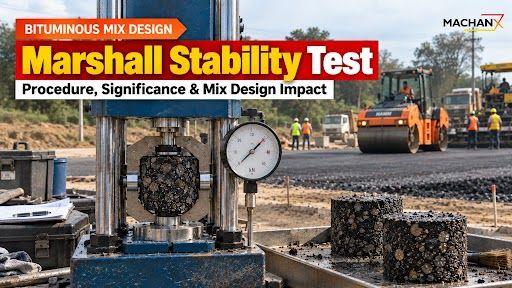
Introduction: Why one layer of asphalt is never enough
Look at any well-built highway and you see a smooth, dark surface. Beneath it sits a stack of bituminous layers, each engineered for a different job. Asphalt that carries traffic loads is a very different problem from asphalt that resists rain, sunlight and tyre abrasion.
In Indian practice, three mixes do most of this work:
- •DBM: Dense Bituminous Macadam
- •BC: Bituminous Concrete
- •SDBC: Semi-Dense Bituminous Concrete
Confusing them leads to under-designed pavements, premature rutting, cracking, and disputes on site. This guide explains what each layer does, how they differ, and how to choose between them. It follows MoRTH Specifications for Road and Bridge Works (Section 500) and IRC:37 (flexible pavement design).
The flexible pavement at a glance
A flexible pavement spreads wheel loads downward, so stress is highest at the top and falls with depth. Materials are chosen to match.
┌─────────────────────────────┐
│ BC / SDBC (wearing) │ ← Traffic, weather, skid resistance
├─────────────────────────────┤
│ DBM (binder/base) │ ← Structural strength, load spreading
├─────────────────────────────┤
│ Granular base (WMM / CTB) │
├─────────────────────────────┤
│ Granular sub-base (GSB) │
├─────────────────────────────┤
│ Compacted subgrade │
└─────────────────────────────┘
DBM is the structural bituminous layer. BC or SDBC is the wearing course, the layer that meets the vehicle.
1. DBM (Dense Bituminous Macadam): the structural backbone
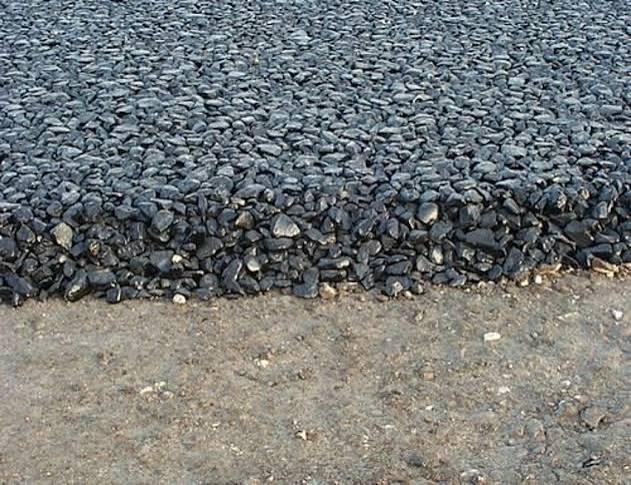
What it does
DBM is the main load-bearing bituminous layer. It distributes traffic loads to the granular layers below, resists fatigue cracking at the bottom of the bituminous layer, and provides a stable, level platform for the wearing course.
Key characteristics
- •Aggregate: Coarser, with nominal maximum sizes of about 37.5 mm (Grading 1) and 26.5 mm (Grading 2).
- •Thickness: Typically 50 to 100 mm per layer, and often laid in two lifts on national highways.
- •Binder content: Lower than the surface mixes, typically around 4 to 4.5% by weight of mix.
- •Binder grade: VG-30 for most conditions, VG-40 for heavy traffic and hot climates.
- •Design method: Marshall mix design, targeting roughly 3 to 5% air voids.
Why it matters
Most premature pavement failures start in the structural layers. A well-compacted DBM gives the pavement stiffness and fatigue life. A poorly compacted one shows up as rutting, shoving and bottom-up cracking within a few monsoons.
2. BC (Bituminous Concrete): the premium wearing course
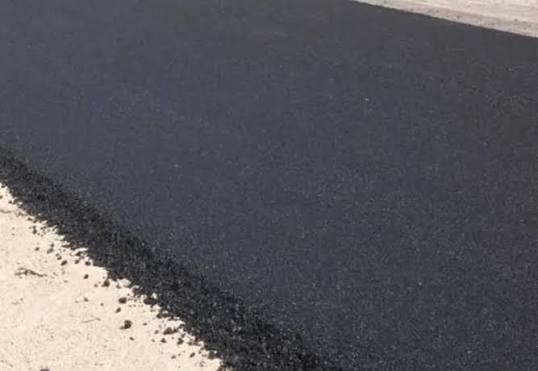
What it does
BC is the high-quality surface layer for high-traffic roads. It provides skid resistance, waterproofing, ride quality, and resistance to rutting and raveling, and it protects DBM from water and oxidation.
Key characteristics
- •Aggregate: Well-graded and finer than DBM, with more fines and filler and nominal sizes of about 19 mm or 13.2 mm.
- •Thickness: Typically 30 to 50 mm.
- •Binder content: Higher than DBM, typically around 5 to 5.5%, giving a dense, durable mat.
- •Binder grade: VG-30 or VG-40, and polymer-modified bitumen (PMB) or crumb-rubber modified bitumen (CRMB) on heavy-traffic corridors.
- •Aggregate quality: Tighter limits on abrasion (Los Angeles), flakiness and polishing (PSV) than base layers.
Why it matters
The wearing course takes the worst of everything: tyre shear, UV, temperature swings and monsoon water. BC's dense, well-graded structure keeps water out and stability high, which is why it's the standard surface on national highways and expressways.
3. SDBC (Semi-Dense Bituminous Concrete): the economical surface
.jpg&w=1920&q=75)
What it does
SDBC is a thinner, more economical wearing course. It serves the same purpose as BC, protecting the layers below and giving a smooth riding surface, at lower cost and with slightly lower performance.
Key characteristics
- •Aggregate: Nominal size around 13.2 mm, with somewhat coarser grading than BC.
- •Thickness: Typically 25 to 30 mm.
- •Binder content: Moderate, generally between DBM and BC.
- •Best suited for: State highways, major district roads, urban roads and moderate-traffic corridors.
Why it matters
Not every road needs the cost of BC. SDBC lets road owners deliver a durable surface within budget where traffic doesn't justify a thicker premium mat. For heavy or fast-growing traffic, it is a false economy.
DBM vs BC vs SDBC: comparison table
| Parameter | DBM | BC | SDBC |
|---|---|---|---|
| Role | Binder/base course (structural) | Wearing course (premium) | Wearing course (economical) |
| Typical thickness | 50–100 mm | 30–50 mm | 25–30 mm |
| Aggregate size | Coarse (26.5–37.5 mm) | Fine (13.2–19 mm) | Medium-fine (~13.2 mm) |
| Binder content | Lowest | Highest | Intermediate |
| Main function | Load spreading, fatigue resistance | Skid resistance, waterproofing, durability | Surface protection at lower cost |
| Typical use | All flexible pavements | NH, expressways, heavy traffic | SH, MDR, urban, moderate traffic |
| Position | Below wearing course | Top | Top |
Values are typical ranges. Always confirm against the project's contract specification and the current MoRTH revision, since clause numbers, gradings and limits differ between revisions.
How the three layers work together
- •Prime coat seals the granular base.
- •DBM goes down in one or two lifts and is compacted to the specified density.
- •Tack coat (typically a rapid-setting emulsion) bonds the layers. Poor bond causes slippage cracking and delamination.
- •BC or SDBC is laid as the final wearing course.
The layers behave as a monolithic system. If the bond between them fails, the structure works as separate thin slabs and fails early.
Materials and quality: what makes or breaks these layers
Bitumen
Paving bitumen is graded under IS 73 (VG-10, 20, 30, 40). Modified binders follow IRC:SP:53 and IS 15462. Major Indian suppliers include IOCL, HPCL, BPCL, Nayara Energy, MRPL and CPCL, and international players like Shell Bitumen are also active. Emulsions and specialty products come from companies such as Hindustan Colas and Tiki Tar.
Modifiers and additives
- •Polymer modifiers such as SBS (e.g., Kraton) improve rutting and fatigue resistance.
- •Warm-mix additives (e.g., Sasol's Sasobit) allow lower production temperatures.
- •Anti-stripping agents (e.g., Nouryon Wetfix) improve aggregate-binder adhesion in wet climates.
Plant and paving equipment
- •Hot-mix plants: Ammann, Marini (Fayat), Astec, Apollo.
- •Pavers: Vögele (Wirtgen Group), Dynapac, Volvo CE, Caterpillar.
- •Rollers: Dynapac, BOMAG, HAMM, Sakai.
- •Lab equipment: Marshall apparatus and bitumen testing equipment are supplied by firms such as Controls and Aimil.
Brands are listed as commonly used industry examples, not endorsements. Always verify product approvals and availability against your tender specification.
Common site mistakes (and how to avoid them)
- •Under-compaction: The single biggest cause of early distress. Targets are typically around 98% of the laboratory Marshall density, verified with core tests.
- •Incorrect temperatures: Overheated bitumen ages quickly, while mixes laid too cold can't be compacted. Monitor mixing, laying and rolling temperatures.
- •Missing or uneven tack coat: Causes debonding between DBM and the wearing course.
- •Laying in rain or on damp surfaces: Traps moisture and invites stripping.
- •Poor aggregate quality: Flaky, soft or dusty aggregate weakens the mix regardless of binder quality.
- •Skipping gradation checks: Plant drift changes binder demand, so test regularly.
Choosing the right combination
| Road type | Typical bituminous section |
|---|---|
| Expressway / National Highway | DBM (multiple lifts) + BC, often with PMB/CRMB |
| State Highway / MDR | DBM + BC or SDBC |
| Urban arterial roads | DBM + BC or SDBC (with drainage attention) |
| Low-volume roads | Bituminous macadam or thin surfacing, per IRC guidelines |
The exact thicknesses should come from IRC:37 design based on design traffic (MSA), subgrade strength (CBR) and material properties, not thumb rules.
Frequently asked questions
What is the difference between DBM and BC? DBM is a coarser, structural layer that carries load. BC is a finer, richer surface mix that resists wear, weather and skidding.
Is SDBC better than BC? No. BC performs better under heavy traffic, while SDBC is a lower-cost option for moderate traffic.
Can DBM be used as a surface course? Not recommended. Its coarse texture and lower binder content make it more permeable and less durable at the surface.
Which bitumen grade is used for DBM and BC? VG-30 is most common, VG-40 is used for heavy traffic or hot regions, and PMB/CRMB is used for high-performance wearing courses.
Why is tack coat important between layers? It bonds the layers so they act as one structure, preventing slippage cracking and delamination.
How is the mix designed? Typically by the Marshall method, checking stability, flow, air voids, VMA and VFB against the specification.