


India's construction equipment market is closely connected to infrastructure development, industrial expansion, logistics networks and urban growth. While established metropolitan regions continue to generate significant construction activity, emerging industrial cities and infrastructure corridors are creating additional opportunities for equipment manufacturers, dealers, suppliers and marketplace businesses.
For construction equipment businesses, the important question is no longer just which city is growing. It is where construction activity is moving from planning to execution, what type of projects are coming up, and which equipment categories those projects may require.
Understanding these signals can help businesses identify potential markets, plan inventory, expand distribution networks and prepare for future demand.
Why Construction Equipment Demand Is Expanding Beyond Major Metros
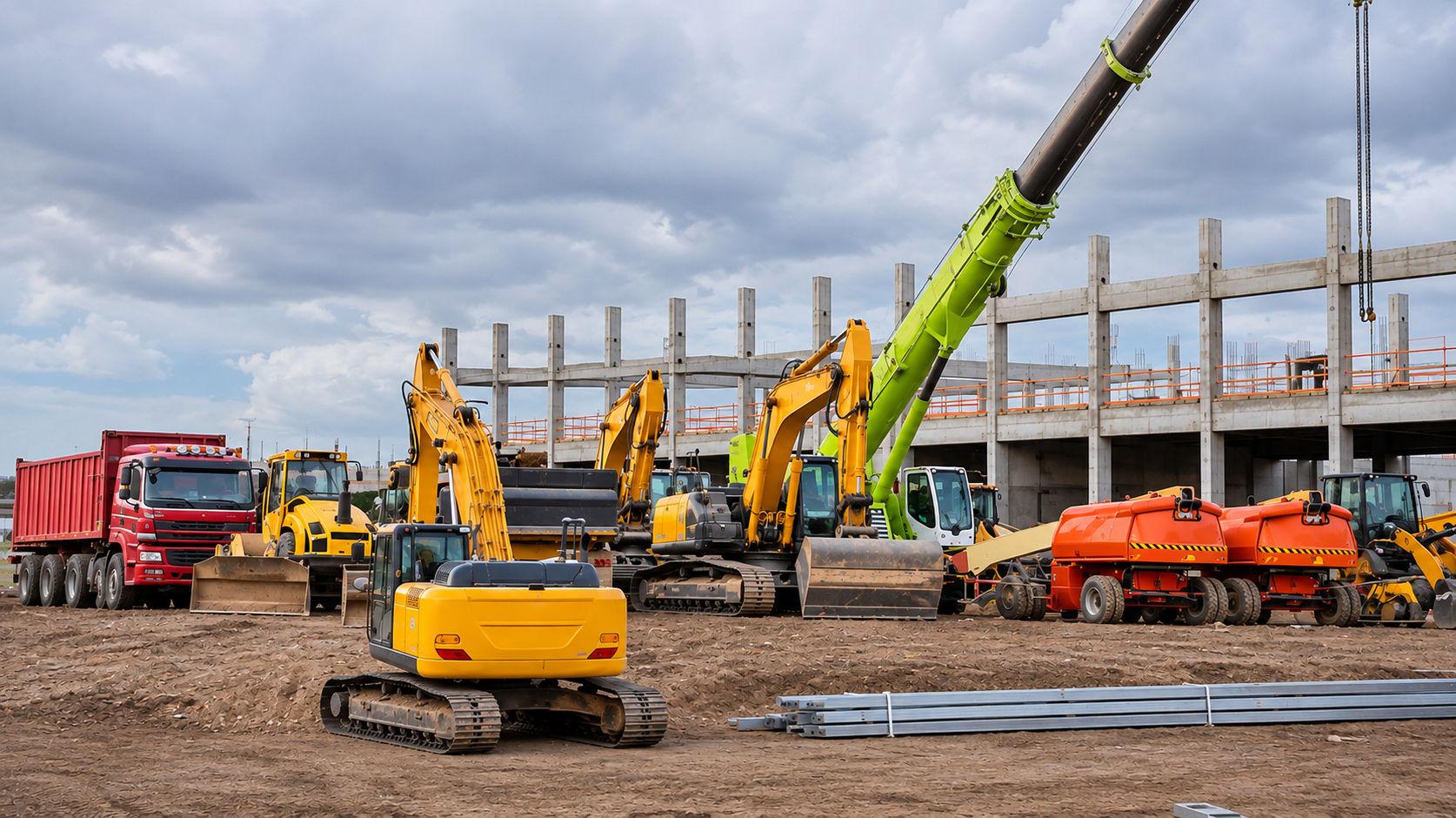
Construction activity is increasingly influenced by the development of industrial corridors, logistics parks, manufacturing facilities, road networks, urban infrastructure and regional connectivity projects.
Several factors are contributing to this shift:
- •Industrial expansion: Manufacturing facilities and industrial parks require site preparation, foundations, concrete work and material handling.
- •Logistics development: Warehouses, freight hubs and distribution centres create demand for earthmoving, compaction and concrete equipment.
- •Infrastructure connectivity: Roads, highways, railways and port-related projects generate demand across different stages of construction.
- •Urban development: Residential, commercial and public infrastructure projects require equipment for excavation, concrete placement and finishing.
- •Regional investment: New industrial and infrastructure investments can create demand outside established metropolitan markets.
Colliers' 2026 research identified 30 high-potential industrial and warehousing hubs across India, including emerging and nascent locations supported by infrastructure expansion and manufacturing growth.
This signals that equipment businesses should monitor regional development patterns instead of concentrating only on traditional metro markets.
Emerging Cities and Industrial Hubs to Watch
The following locations are worth monitoring because of their industrial, logistics or infrastructure development potential. They represent markets to investigate—not guaranteed equipment demand forecasts.
1. Jaipur, Rajasthan

Jaipur is an important regional centre for industrial activity, logistics and connectivity.
Potential construction activity to monitor includes:
- •Industrial and warehousing developments
- •Road connectivity and urban infrastructure
- •Commercial and institutional construction
- •Industrial site preparation
Equipment businesses can monitor project approvals, industrial land development and construction packages to identify which machinery categories may be required.
2. Lucknow, Uttar Pradesh

Lucknow's infrastructure and urban development activity makes it a market worth tracking.
Relevant project segments include:
- •Urban road and connectivity projects
- •Commercial and institutional developments
- •Residential construction
- •Public infrastructure upgrades
The equipment requirement will depend on the project type and stage, from excavation and foundation work to concrete construction and finishing.
3. Indore, Madhya Pradesh

Indore is an important industrial and commercial centre in Central India.
Areas to monitor include:
- •Industrial and manufacturing projects
- •Logistics and warehousing facilities
- •Urban infrastructure development
- •Commercial construction
For equipment suppliers, industrial project execution can create opportunities across site preparation, concrete work and material handling.
4. Surat, Gujarat

Surat's manufacturing and industrial base makes it relevant for businesses tracking industrial construction.
Potential project segments include:
- •Manufacturing facilities
- •Industrial infrastructure
- •Warehousing and logistics
- •Urban development projects
Equipment demand will vary according to the scale of the project and whether construction is at the earthwork, structural or finishing stage.
5. Coimbatore, Tamil Nadu

Coimbatore's manufacturing ecosystem makes it a location to monitor for industrial and commercial construction.
Relevant development areas include:
- •Manufacturing facilities
- •Industrial buildings
- •Logistics infrastructure
- •Urban and commercial projects
Equipment businesses can track industrial expansion and construction activity to identify opportunities for machinery supply.
6. Visakhapatnam, Andhra Pradesh

Visakhapatnam's port-led industrial ecosystem makes it relevant for infrastructure and industrial development monitoring.
Potential project segments include:
- •Port-related infrastructure
- •Industrial facilities
- •Logistics and warehousing
- •Connectivity projects
Large industrial and infrastructure projects may require different equipment categories across earthwork, lifting, concrete and material handling operations.
Which Construction Projects Create Equipment Demand?
Different project types require different machinery. Identifying the project category is an important first step in understanding potential equipment demand.
Project Type
Potential Equipment Categories
| Project Type | Potential Equipment Categories |
|---|---|
| Roads and highways | Excavators, motor graders, rollers, asphalt pavers |
| Industrial facilities | Excavators, cranes, concrete equipment, material handling machinery |
| Warehousing and logistics parks | Earthmoving equipment, compactors, concrete equipment |
| Urban infrastructure | Excavators, concrete pumps, compaction equipment |
| Commercial and residential construction | Concrete mixers, bar bending machines, bar cutting machines, lifting equipment |
| Port and heavy industrial projects | Cranes, loaders, material handling and heavy earthmoving equipment |
These are indicative applications. Actual equipment requirements depend on project specifications, construction methods, terrain, scale and execution stage.
How to Identify Equipment Demand Before Procurement Begins
For equipment businesses, identifying a growing city is only the starting point. The next step is understanding whether projects are likely to move into active construction.
1. Track Project Approvals and Announcements
Monitor announcements from government departments, industrial development authorities, infrastructure agencies and project developers.
Look for information such as:
- •Project location
- •Project type and scale
- •Approvals and clearances
- •Estimated construction timeline
- •Executing agency or developer
An announcement indicates potential activity, but it does not confirm immediate equipment demand.
2. Monitor Tender and Contract Awards
Tender notices and contract awards provide more specific information about upcoming construction packages.
Pay attention to:
- •Scope of work
- •Project location
- •Construction duration
- •Contractor or EPC company
- •Package-specific requirements
Once a project is awarded, the next important signal is mobilisation and the start of on-site execution.
3. Identify the Construction Stage
Equipment demand changes as a project progresses.
Site preparation: Excavators, loaders, graders and compactors may be required.
Foundation and structural work: Concrete equipment, cranes, lifting systems and rebar machinery may become relevant.
Road and pavement work: Rollers, asphalt pavers and road construction machinery may be needed.
Finishing and commissioning: Smaller construction equipment and specialised machinery may be required depending on the project.
Understanding the construction stage helps businesses avoid offering equipment too early or too late.
4. Track EPC Companies and Project Developers
Equipment demand is often influenced by the contractors executing the work.
Monitor:
- •New project wins
- •Expansion into new regions
- •Construction package awards
- •Equipment procurement announcements
- •Site mobilisation updates
This can help manufacturers, dealers and suppliers identify potential business opportunities before procurement becomes urgent.
5. Evaluate Local Equipment Availability
A market with strong construction activity may already have sufficient equipment supply.
Before expanding into a region, assess:
- •Existing equipment dealers and suppliers
- •Machine availability
- •Local construction activity
- •Equipment service and spare parts support
- •Buyer enquiries and procurement requirements
The strongest opportunity may be in a market where project activity is increasing but equipment availability or supplier coverage remains limited.
What This Means for Construction Equipment Businesses
Emerging construction markets create different opportunities for different industry stakeholders.
Equipment Manufacturers
Identify regions where project activity may create demand for specific equipment categories. Use these signals to support dealer expansion and distribution planning.
Equipment Dealers
Monitor project execution and local equipment availability to plan inventory and identify potential buyers.
Equipment Suppliers
Track the machinery categories required by industrial, infrastructure and commercial projects to align product offerings with market needs.
Construction Equipment Marketplace Platforms
Connect equipment demand and supply across regions by improving product visibility and helping businesses discover relevant machinery and suppliers.
Why Project Execution Matters More Than City Growth
A city may attract investment and infrastructure announcements without generating immediate equipment demand.
Equipment procurement usually depends on several factors:
- •Land and site readiness
- •Project approvals
- •Contractor appointment
- •Construction package mobilisation
- •Availability of project financing
- •Actual commencement of work
This distinction is important for equipment businesses. A project pipeline represents potential demand, while active construction creates a more immediate requirement for machinery.
Industry analysis also highlights that project execution and equipment utilisation are critical factors in converting infrastructure investment into actual market demand.
Conclusion
India's next construction equipment demand hotspots may emerge beyond the established metropolitan markets.
Industrial expansion, logistics development, urban infrastructure and connectivity projects are creating new regions to monitor. However, identifying a growing city is not enough.
Equipment businesses need to understand what is being built, which projects are moving into execution, what machinery those projects require and when procurement may begin.
The opportunity is not simply to follow construction growth. It is to identify equipment demand before it becomes visible to the entire market.
MachanX helps construction businesses discover equipment buying and selling opportunities across India. Explore construction equipment listings and connect with suppliers through MachanX.
Frequently Asked Questions
Which cities are emerging as construction equipment demand hotspots in India?
Cities such as Jaipur, Lucknow, Indore, Surat, Coimbatore and Visakhapatnam are worth monitoring for industrial, logistics and infrastructure development. Actual equipment demand depends on project execution and construction activity.
What drives construction equipment demand in India?
Infrastructure development, industrial construction, logistics parks, urban development, mining and road construction are important sources of equipment demand.
Which construction equipment is commonly required for infrastructure projects?
Excavators, loaders, motor graders, rollers, cranes, concrete equipment and asphalt pavers are used across different infrastructure project types. Requirements vary according to project scope and construction stage.
How can equipment dealers identify new business opportunities?
Dealers can monitor project approvals, tender awards, contractor appointments, site mobilisation and regional equipment availability to identify potential procurement opportunities.
Does a new infrastructure announcement mean immediate equipment demand?
No. Equipment demand generally becomes more actionable when projects receive approvals, contractors are appointed and construction work begins.
How can MachanX help equipment businesses?
MachanX is a construction equipment marketplace that helps businesses discover equipment listings and connect with suppliers for buying and selling machinery.