


Introduction
Managing construction equipment is not just about purchasing the right machine. For contractors, infrastructure companies and equipment fleet owners, the bigger challenge is ensuring that every machine is being used efficiently, maintained properly and operated at the right project location.
When businesses manage multiple machines across different construction sites, monitoring equipment manually becomes increasingly difficult.
Consider a contractor managing excavators, backhoe loaders, motor graders, wheel loaders and road rollers across multiple project locations.
The contractor needs to know:
- •Where is each machine currently operating?
- •How many hours is the machine actually working?
- •How much diesel is it consuming?
- •Is the equipment spending excessive time idling?
- •When is the next scheduled maintenance due?
- •Are there any machine faults that require immediate attention?
Without a proper monitoring system, collecting this information can require repeated calls to site supervisors, manual registers and operator reports.
This is where construction equipment telematics becomes useful.
By combining GPS tracking, machine sensors, connectivity and fleet management software, telematics provides information about machine location, operating hours, fuel usage, equipment health and utilisation.
For Indian contractors and fleet owners, this technology can improve operational visibility, support maintenance planning and help identify unnecessary operating expenses.
Several established construction equipment manufacturers and technology providers in India now offer solutions for monitoring machinery.
In this guide, we will understand how construction equipment telematics works, explore popular brands and systems available in India, and explain how businesses can choose the right solution for their equipment fleet.
1. What Is Construction Equipment Telematics?
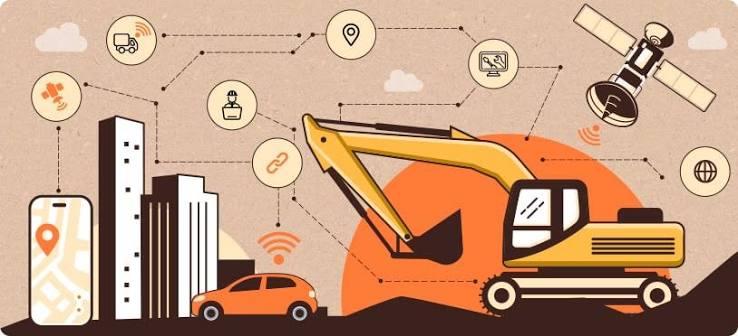
Construction equipment telematics is a technology that collects and transmits information from construction machinery to a central monitoring platform.
It combines two important technologies:
- •Telecommunications: Transmitting information between the machine and a remote platform.
- •Informatics: Processing and analyzing the collected machine data.
A telematics system can help equipment owners monitor machine location, operating hours, fuel consumption, idle time, diagnostic codes and maintenance requirements, depending on the equipment and system installed.
For example, an excavator working at a highway construction project can transmit operational information to a fleet manager's dashboard.
Instead of manually visiting the site to collect machine readings, the fleet manager can review available information remotely.
What information can telematics monitor?
| Parameter | What it tells the fleet owner |
|---|---|
| GPS Location | Where the equipment is operating |
| Engine Hours | Total engine operating time |
| Fuel Consumption | Fuel used during machine operation |
| Fuel Level | Available fuel in the tank |
| Idle Time | Time the engine runs without productive work |
| Machine Health | Available diagnostic codes and alerts |
| Maintenance Alerts | Upcoming or overdue service requirements |
| Utilization | How effectively the machine is being used |
2. How Does a Construction Equipment Telematics System Work?

A typical telematics system collects machine information and transfers it to a remote platform for monitoring and analysis.
The process generally involves four components.
A. Machine Sensors and Electronic Control Units
Modern construction equipment contains electronic control systems that monitor different machine functions.
Depending on the machine, these systems can provide information about:
- •Engine operating hours.
- •Fuel level and consumption.
- •Engine temperature.
- •Hydraulic system parameters.
- •Diagnostic trouble codes.
- •Machine operating conditions.
Some equipment also requires additional sensors to collect specific information, particularly for aftermarket fuel monitoring.
B. Telematics Control Unit
A telematics control unit collects information from the machine's electronic systems and connected sensors.
It may also include GPS positioning capabilities and communication hardware.
The unit prepares the collected information for transmission to a remote monitoring platform.
C. Communication Network
The collected data is transmitted using available communication networks.
Common communication methods include:
- •Cellular networks such as 4G.
- •Satellite communication for supported applications.
- •Other wireless communication technologies, depending on the system.
Network availability is particularly important for machines working in remote mining areas, highway projects and rural construction locations.
D. Cloud-Based Monitoring Platform
The information is received and processed by a software platform.
Fleet managers can access available machine information through:
- •Desktop dashboards.
- •Mobile applications.
- •Equipment monitoring portals.
- •Automated reports and alerts.
This allows businesses to review equipment information without depending entirely on manual site reporting.
3. GPS Tracking: Monitor Equipment Location Across Multiple Sites

When a contractor operates several machines across different projects, knowing their location becomes an important part of fleet management.
GPS-enabled telematics helps equipment owners monitor machine locations through a digital map.
How GPS tracking helps construction businesses
1. Equipment Location Monitoring
Fleet managers can check the reported location of machines operating at different construction sites.
2. Movement History
Depending on the system, businesses can review equipment movement records and understand when and where machines have travelled.
3. Geofencing
Geofencing allows fleet managers to define virtual geographical boundaries around selected locations.
If supported by the telematics platform, alerts can be generated when equipment enters or leaves a defined area.
4. Equipment Security
Location alerts and movement records can help identify unexpected equipment movement.
However, GPS tracking is a monitoring tool, not a complete theft-prevention system.
Practical example
Consider a contractor operating:
- •Two excavators at a highway project.
- •One wheel loader at a material yard.
- •One motor grader at another project location.
Without centralised monitoring, the fleet manager may need to contact different site supervisors to understand equipment locations.
A telematics dashboard can bring available location information into one place.
4. Fuel Monitoring: Understand Where Your Equipment Fuel Is Going
Fuel is one of the important operating expenses for diesel-powered construction equipment.
However, simply knowing how much diesel was purchased does not tell a fleet owner how efficiently the equipment is consuming fuel.
Fuel monitoring through telematics can provide additional information.
Important fuel parameters to monitor
Fuel Consumption
Track the fuel consumed during a selected operating period.
Fuel Level
Monitor available fuel levels when supported by the machine and connected sensors.
Fuel Consumption Per Operating Hour
Understand how much fuel the machine consumes during its operating hours.
Idle Fuel Consumption
Identify fuel consumed while the engine is running without productive machine activity, where the system supports this measurement.
Example: Understanding fuel consumption
Suppose an excavator operates for 8 engine hours and consumes 80 litres of diesel during that period.
Fuel consumption per engine hour:
80 litres ÷ 8 hours = 10 litres per engine hour.
This gives the fleet manager a baseline to compare similar operating periods.
However, fuel consumption varies with machine model, workload, soil conditions, operator behaviour, attachments and site conditions.
A comparison should therefore be made between similar operating conditions rather than treating one machine's consumption as a universal benchmark.
How fuel monitoring helps
- •Identify unusual changes in fuel consumption.
- •Compare consumption across similar machines.
- •Understand fuel usage during idling.
- •Improve fuel planning.
- •Investigate possible operational inefficiencies.
Fuel monitoring should be combined with proper fuel records and site-level verification.
5. Engine Hours and Machine Utilisation: Are Your Machines Working Efficiently?
A machine can be present at a construction site without necessarily contributing to productive work.
For fleet owners, understanding the difference between engine hours and productive utilisation is important.
What are engine hours?
Engine hours represent the time the engine has operated.
They are commonly used to plan maintenance intervals and monitor equipment usage.
What is machine utilisation?
Machine utilisation measures how effectively equipment is being used during the available working period.
A simple utilisation calculation is:
Machine Utilisation (%) = Productive Operating Hours ÷ Available Working Hours × 100
Example calculation
Suppose an excavator is scheduled for 10 working hours in a day.
Its productive operating time is 7 hours.
Machine utilisation:
(7 ÷ 10) × 100 = 70%
This means the machine was productively utilised for 70% of its scheduled working time, based on the defined measurement method.
The remaining time should be investigated to understand whether it was caused by:
- •Equipment breakdown.
- •Operator unavailability.
- •Material shortages.
- •Project delays.
- •Waiting for other machinery.
- •Unplanned idle time.
Important: Engine hours, idle hours and productive hours are different measurements. Telematics data should be interpreted according to the machine's capabilities and the fleet owner's definition of productive work.
6. Idle Time Monitoring: Identify Unproductive Machine Hours
Engine idling occurs when the machine's engine is running but the equipment is not performing productive work.
Some idling is unavoidable. Operators may need to keep the engine running during certain operating conditions.
However, excessive idling can increase fuel consumption and operating expenses.
Common reasons for excessive equipment idling
- •Waiting for construction materials.
- •Poor coordination between equipment and transport vehicles.
- •Unplanned project delays.
- •Operator scheduling problems.
- •Inefficient equipment allocation.
- •Incorrect machine selection for the application.
How telematics helps
Telematics systems that support idle-time monitoring can help fleet managers:
- •Identify machines with high idle hours.
- •Compare operating patterns across projects.
- •Investigate unusual idling trends.
- •Improve equipment scheduling.
- •Review operator and site-level productivity.
For example, if two similar excavators are working on comparable projects but show significantly different idle-time patterns, the fleet manager can investigate the reasons.
The objective should be to identify operational problems rather than simply reduce every instance of idling.
7. Predictive Maintenance: Identify Potential Problems Before Equipment Breakdown
Unplanned equipment breakdowns can interrupt construction activities and affect project schedules.
Traditional maintenance approaches generally include:
- •Scheduled preventive maintenance.
- •Maintenance based on operating hours.
- •Repairs after equipment failure.
Predictive maintenance takes a more data-driven approach.
It uses machine condition information, diagnostic alerts, sensor readings and historical operating patterns to help identify potential equipment problems.
How does predictive maintenance work?
Step 1: Collect Machine Data
The system collects available information from sensors and electronic control systems.
This may include engine temperature, pressure readings, fault codes and other machine parameters.
Step 2: Identify Abnormal Conditions
The monitoring platform or maintenance team reviews unusual readings, alerts and changes in machine behaviour.
Step 3: Analyse Equipment Condition
Historical data, manufacturer guidelines and diagnostic information help maintenance teams investigate potential problems.
Step 4: Plan Maintenance
Based on the findings, the maintenance team can schedule inspections, servicing or repairs before a potential problem becomes a major breakdown.
Predictive vs Preventive Maintenance
| Parameter | Preventive Maintenance | Predictive Maintenance |
|---|---|---|
| Basis | Scheduled intervals | Machine condition and data |
| Planning | Based on time or operating hours | Based on observed condition and trends |
| Monitoring | Periodic inspection | Continuous or frequent data monitoring |
| Objective | Reduce the likelihood of failure | Identify potential failures earlier |
| Data requirement | Maintenance records | Sensors, diagnostics and historical data |
8. Popular Construction Equipment Telematics Brands and Systems in India
Construction equipment telematics solutions are available through two main channels:
- •OEM telematics: Systems offered by equipment manufacturers for supported machines.
- •Third-party telematics: Independent GPS tracking, fuel monitoring and fleet management solutions that may support different equipment brands.
Understanding the difference is important, particularly for contractors managing mixed equipment fleets.
A. OEM Telematics Systems from Construction Equipment Manufacturers
These systems are developed or provided by equipment manufacturers to monitor their supported machines.
1. JCB – LiveLink
JCB offers LiveLink, its connected equipment monitoring platform.
LiveLink 4.0 provides machine insights and analytics that can help equipment owners monitor machine productivity, performance and operational conditions.
Its features include:
- •Machine location tracking.
- •Fuel utilisation information.
- •Idle-time monitoring.
- •Machine operating hours.
- •Machine health and service alerts.
- •Maintenance history.
- •Equipment utilisation reports.
For contractors operating JCB backhoe loaders and excavators, LiveLink can help monitor machine performance and manage equipment usage.
Official website: https://www.jcb.com/en-IN/explore/insight/livelink/
2. Mahindra Construction Equipment – iMAXX
Mahindra Construction Equipment offers iMAXX telematics for its EarthMaster backhoe loaders and RoadMaster motor graders.
The system provides information about machine health, location, operations and maintenance.
Key features include:
- •Live machine location.
- •Historical location tracking.
- •Battery and alternator health monitoring.
- •Engine temperature monitoring.
- •Fuel-level analysis.
- •Vehicle diagnostic reports.
- •Geofence alerts.
- •Service reminders.
- •Operator management information.
The system is particularly relevant for contractors operating supported Mahindra EarthMaster and RoadMaster machines.
Official website: https://www.mahindraconstructionequipment.com/imaxx/
3. Volvo Construction Equipment – CareTrack
Volvo CE offers CareTrack, a telematics solution designed to provide information about machine location, fuel levels and total machine hours.
Depending on the subscription and machine configuration, the platform provides:
- •Machine location.
- •Fuel-level information.
- •Total machine hours.
- •Fuel consumption information.
- •Machine utilisation rates.
- •Performance information.
- •Operational alarms.
- •Fleet monitoring reports.
CareTrack offers different service levels, including CareTrack Start and CareTrack Advanced.
It can help fleet owners understand equipment usage and plan machine operations more effectively.
Official website: https://www.volvoce.com/india/en-in/volvo-services/caretrack/
4. Caterpillar – Product Link and VisionLink

Caterpillar offers Product Link hardware and VisionLink fleet management software.
Product Link collects machine information, while VisionLink provides a platform for monitoring and analysing equipment data.
Features include:
- •Machine location.
- •Engine operating hours.
- •Fuel consumption.
- •Idle-time information.
- •Equipment health and diagnostic codes.
- •Machine utilisation.
- •Maintenance planning.
- •Mixed-fleet monitoring.
VisionLink also offers mixed-fleet capabilities, allowing businesses to manage supported Cat and non-Cat equipment through a central platform.
This can be particularly useful for large contractors managing machinery from multiple manufacturers.
Official websites:
https://www.cat.com/en_IN/support/technology/fleet-management-solutions/product-link/faqs.html
https://www.cat.com/en_IN/by-industry/construction-industry-resources/technology/visionlink.html
5. Komatsu – KOMTRAX
Komatsu offers KOMTRAX, a remote equipment monitoring and management system.
It provides information about machine location, operating conditions and equipment performance for supported machines.
Depending on the machine and system version, features can include:
- •GPS-based machine location.
- •Fuel consumption information.
- •Idle-time monitoring.
- •Operating hours.
- •Equipment health information.
- •Maintenance reminders.
- •Machine movement alerts.
- •Diagnostic information.
Komatsu also offers KOMTRAX Plus for selected larger mining and production-class machines.
Contractors and mining businesses operating compatible Komatsu machinery can use these systems to improve equipment monitoring and maintenance planning.
Official website: https://www.komatsu.com/en-ae/services/komtrax
6. Tata Hitachi – ConSite and InSite
Tata Hitachi offers connected machine monitoring solutions, including ConSite and InSite.
ConSite provides consolidated operational reports, machine health alerts and performance-related information.
InSite offers GPS/GPRS-based remote machine monitoring, with features including:
- •Machine location.
- •Fuel-level monitoring.
- •Machine hour-meter information.
- •Machine operation and utilisation reports.
- •Geofencing.
- •Fleet-level monitoring.
- •Maintenance-related information.
These systems can help equipment owners monitor machine performance and understand operational conditions at different project sites.
The applicable system and features depend on the machine model and configuration.
Official websites:
https://www.tatahitachi.co.in/insite/
B. Third-Party GPS Tracking, Fuel Monitoring and Fleet Management Providers in India
Third-party telematics providers are worth evaluating when businesses operate equipment from different manufacturers.
Unlike manufacturer-specific systems, these solutions may offer broader fleet tracking and asset monitoring capabilities.
However, machine compatibility and available data should always be verified before purchasing.
1. Fleetx – Construction Fleet Management and Fuel Monitoring
Fleetx offers fleet management and telematics solutions for construction and heavy equipment operations.
Its construction solutions focus on monitoring equipment and vehicles across project locations.
Key capabilities include:
- •GPS tracking.
- •Equipment location monitoring.
- •Fuel-level monitoring.
- •Fuel consumption analytics.
- •Idle-time monitoring.
- •Engine operating hours.
- •Geofencing and unauthorised movement alerts.
- •Fuel refill and suspicious fuel-drop alerts.
- •Fleet and equipment performance reports.
Fleetx also offers fuel management solutions that can monitor fuel levels, identify suspicious drops and provide alerts.
For contractors managing excavators, dumpers, trucks and other construction assets, it is a relevant provider to evaluate.
Official websites:
https://www.fleetx.ai/solutions/by-industries/construction
https://www.fleetx.ai/fuel-management-system
2. FleetOR – GPS Tracking and Fuel Monitoring

FleetOR, from ORMAT Technologies, offers vehicle tracking and fuel monitoring solutions.
Its website specifically mentions monitoring trucks, buses, DG sets, excavators and other construction equipment through a centralised platform.
Key capabilities include:
- •GPS-based asset tracking.
- •Digital fuel sensor integration.
- •Fuel-level monitoring.
- •Fuel refill detection.
- •Fuel theft alerts.
- •Work-hour monitoring.
- •Daily travel and trip reports.
- •Fuel analytics.
- •Fleet monitoring dashboards.
FleetOR is particularly relevant for businesses looking to monitor diesel usage and identify unusual fuel-level changes.
Its advertised fuel monitoring accuracy and performance claims should be validated through a demonstration and site trial before purchasing.
Official website: https://fleetor.in/
3. TrackoBit – GPS Fleet Tracking
TrackoBit offers GPS tracking and fleet management software.
Its platform includes:
- •Real-time vehicle location.
- •GPS tracking dashboards.
- •Geofencing.
- •Route deviation alerts.
- •Idling alerts.
- •Custom alerts, including fuel-related alerts.
- •Fleet analytics.
- •Historical tracking information.
It can be considered for location and fleet tracking requirements.
Businesses intending to use TrackoBit for construction machinery should confirm compatibility with the particular equipment, fuel sensor requirements and availability of machine-specific data.
Official website: https://trackobit.com/gps-fleet-tracking-solutions
Note: This comparison is based on publicly described capabilities, not independent product testing. Features, pricing, subscriptions, machine compatibility and regional availability can change. A GPS tracker does not automatically provide accurate fuel consumption or predictive maintenance.
9. OEM Telematics vs Third-Party Telematics: Which Is Better?

One of the most important decisions for equipment owners is whether to use the manufacturer's built-in telematics system or install an independent monitoring solution.
Both approaches have advantages.
OEM Telematics
OEM telematics is provided by the original equipment manufacturer.
For example:
- •JCB LiveLink for supported JCB equipment.
- •Mahindra iMAXX for supported Mahindra equipment.
- •Volvo CareTrack for supported Volvo equipment.
- •Caterpillar Product Link and VisionLink for compatible Cat equipment.
Advantages:
- •Better integration with supported machine electronics.
- •Access to manufacturer-specific machine information.
- •Diagnostic and service-related alerts.
- •Machine-specific operating reports.
- •Support through authorised manufacturer networks.
Limitations:
- •Features may differ between models.
- •Subscription or activation conditions may apply.
- •Managing several manufacturers' systems may require multiple dashboards.
Third-Party Telematics
Third-party systems are offered by independent technology providers.
Examples include Fleetx, FleetOR and TrackoBit.
Advantages:
- •Can support equipment from different manufacturers.
- •May offer centralised fleet monitoring.
- •Additional GPS and fuel sensors can be installed where compatible.
- •Can provide customised alerts and reports.
- •Useful for businesses with mixed equipment fleets.
Limitations:
- •Additional hardware and installation may be required.
- •Compatibility differs between machine models.
- •Some machine information may not be accessible.
- •Hardware, software and annual subscription costs must be considered.
Which should you choose?
If your fleet mainly consists of one manufacturer's machines, start by evaluating its OEM telematics offering.
If you operate equipment from several manufacturers, consider a third-party solution or a platform that supports mixed-fleet integrations.
Some businesses may benefit from using both, provided the systems can share the required data without unnecessary duplication.
10. How to Choose the Right Construction Equipment Telematics System
Not every fleet requires the same level of monitoring.
A contractor operating two excavators may have different requirements from an infrastructure company managing 100 machines across multiple states.
Before selecting a telematics solution, evaluate the following factors.
| Selection factor | What to evaluate |
|---|---|
| Equipment Compatibility | Does the system support your machine make and model? |
| GPS Tracking | Does it provide reliable location information? |
| Fuel Monitoring | Does it measure fuel level and consumption? |
| Fuel Sensor | Is an additional digital fuel sensor required? |
| Engine Hours | Can you monitor operating and idle hours? |
| Maintenance Alerts | Does it support service reminders and diagnostic alerts? |
| Fleet Dashboard | Can you monitor multiple machines together? |
| Connectivity | Does it work in your project locations? |
| Data Access | Can you download and export equipment data? |
| Installation | Is the system factory-fitted or aftermarket? |
| Subscription Cost | What hardware, software and recurring charges apply? |
| Technical Support | Is local installation and support available? |
Questions to ask before purchasing
- •Is the telematics hardware included with the machine?
- •Is a separate subscription required?
- •Which parameters can actually be monitored?
- •Is fuel consumption measured through the machine ECU or an additional sensor?
- •Can the system detect fuel refilling and sudden fuel drops?
- •Is the system compatible with existing fleet management software?
- •What happens when network connectivity is unavailable?
- •Can multiple users access the dashboard?
- •Who provides technical support and troubleshooting?
These questions help buyers understand the actual capabilities and ownership costs of the system.
11. Challenges and Limitations of Construction Equipment Telematics
Although telematics can improve equipment visibility, businesses should understand its limitations before implementation.
1. Network Connectivity
Machines working in remote locations may experience inconsistent cellular connectivity.
Some systems support satellite communication, but availability and costs depend on the solution.
2. Hardware Compatibility
Older machines may require aftermarket devices or additional sensors.
Not all machine parameters will necessarily be accessible.
3. Installation and Subscription Costs
Telematics may involve hardware, installation, connectivity and software subscription expenses.
4. Data Interpretation
Collecting data is not the same as making better decisions.
Fleet managers need to understand the readings and connect them with actual site conditions.
5. Operator and Data Management
Businesses should establish clear processes for reviewing equipment data, assigning responsibilities and acting on alerts.
A telematics platform is most useful when it becomes part of the regular equipment management process.
12. Frequently Asked Questions About Construction Equipment Telematics
What is telematics in construction equipment?
Construction equipment telematics is a technology that collects and transmits information about machine location, operating hours, fuel usage, equipment condition and utilisation to a remote monitoring platform.
Which companies provide GPS tracking for construction equipment in India?
Equipment manufacturers such as JCB, Mahindra, Volvo, Caterpillar, Komatsu and Tata Hitachi offer telematics solutions for supported machines. Independent providers such as Fleetx, FleetOR and TrackoBit also offer GPS tracking or fleet management solutions, subject to equipment compatibility.
Which companies provide fuel monitoring systems for excavators and construction machinery?
Fleetx and FleetOR explicitly offer fuel monitoring solutions for heavy equipment and construction-related applications. OEM systems from manufacturers such as Mahindra, Volvo, Caterpillar and others also provide fuel-related information for supported machines and configurations.
Can I install a third-party GPS and fuel monitoring system on an old excavator?
Yes. Aftermarket GPS tracking and fuel monitoring systems may be installed on older excavators. However, installation requirements depend on the machine's electrical system, fuel tank configuration, sensor compatibility and the hardware selected.
Can GPS tracking detect diesel theft in construction equipment?
GPS tracking alone cannot reliably detect diesel theft. Fuel monitoring generally requires a compatible digital fuel sensor or machine data integration. Systems that support fuel monitoring can generate alerts for suspicious fuel-level changes, refilling events and unexpected drops.
What is the difference between GPS tracking and equipment telematics?
GPS tracking primarily provides location information. Equipment telematics can provide a wider range of data, including operating hours, fuel consumption, idle time and machine health information, depending on the system.
Is OEM telematics better than aftermarket telematics?
OEM telematics can offer better integration with supported machine electronics. Aftermarket systems can be useful for monitoring mixed fleets from different manufacturers. The best choice depends on the required data, compatibility and total cost.
Does every construction machine come with built-in telematics?
No. Availability depends on the manufacturer, machine model and configuration. Some equipment has factory-fitted telematics, while other machines may require aftermarket installation.
Can telematics reduce construction equipment maintenance costs?
Telematics can support maintenance planning through operating-hour tracking, diagnostic information and service reminders. However, actual cost savings depend on maintenance practices, equipment condition and how effectively the information is used.
Is construction equipment telematics suitable for small contractors?
Yes. Small contractors can benefit from basic location tracking, operating-hour monitoring and maintenance reminders. The system should be selected according to fleet size, operating requirements and budget.
Conclusion: Make Better Equipment Management Decisions with Telematics
Construction equipment telematics is changing how contractors and fleet owners monitor their machinery.
From GPS tracking and fuel monitoring to operating-hour analysis and predictive maintenance, these technologies provide useful information for managing equipment more effectively.
In India, equipment manufacturers such as JCB, Mahindra, Volvo, Caterpillar, Komatsu and Tata Hitachi offer telematics solutions for their supported machinery.
Independent technology providers such as Fleetx, FleetOR and TrackoBit offer additional GPS tracking, fuel monitoring and fleet management options, depending on their supported hardware and integrations.
However, the real value comes from converting machine data into practical decisions.
Fleet owners should evaluate their equipment requirements, compare available systems, understand the monitoring features and choose a solution that fits their operations.
Whether you are purchasing new machinery, expanding your equipment fleet or evaluating different equipment suppliers, understanding the technology available with a machine is an important part of making an informed decision.
Explore Construction Equipment on MachanX
Looking to buy or sell construction equipment?
Explore equipment options, discover suppliers and connect with businesses across the construction industry through MachanX.
Visit: https://machanx.com/
MachanX – Buy. Sell. Explore. Grow.