


Mining & Industrial Construction: Which Equipment Will See Higher Demand in India in FY2027?
India's construction-equipment market is entering an important phase. After a subdued FY2025–26, demand is showing signs of recovery, with mining, industrial construction and infrastructure execution contributing to the improvement.
But here is the important question: Which equipment categories are actually positioned to benefit from this demand—and what should buyers, contractors and dealers look for before investing?
The answer is not simply excavators or dump trucks. Different stages of mining and industrial projects require different machines, and the demand for each category depends on the type of material being handled, production targets, site conditions and project execution.
Let's examine where the opportunities are emerging in FY2026–27.
1. India's Construction Equipment Market: What Is Changing in FY2027?
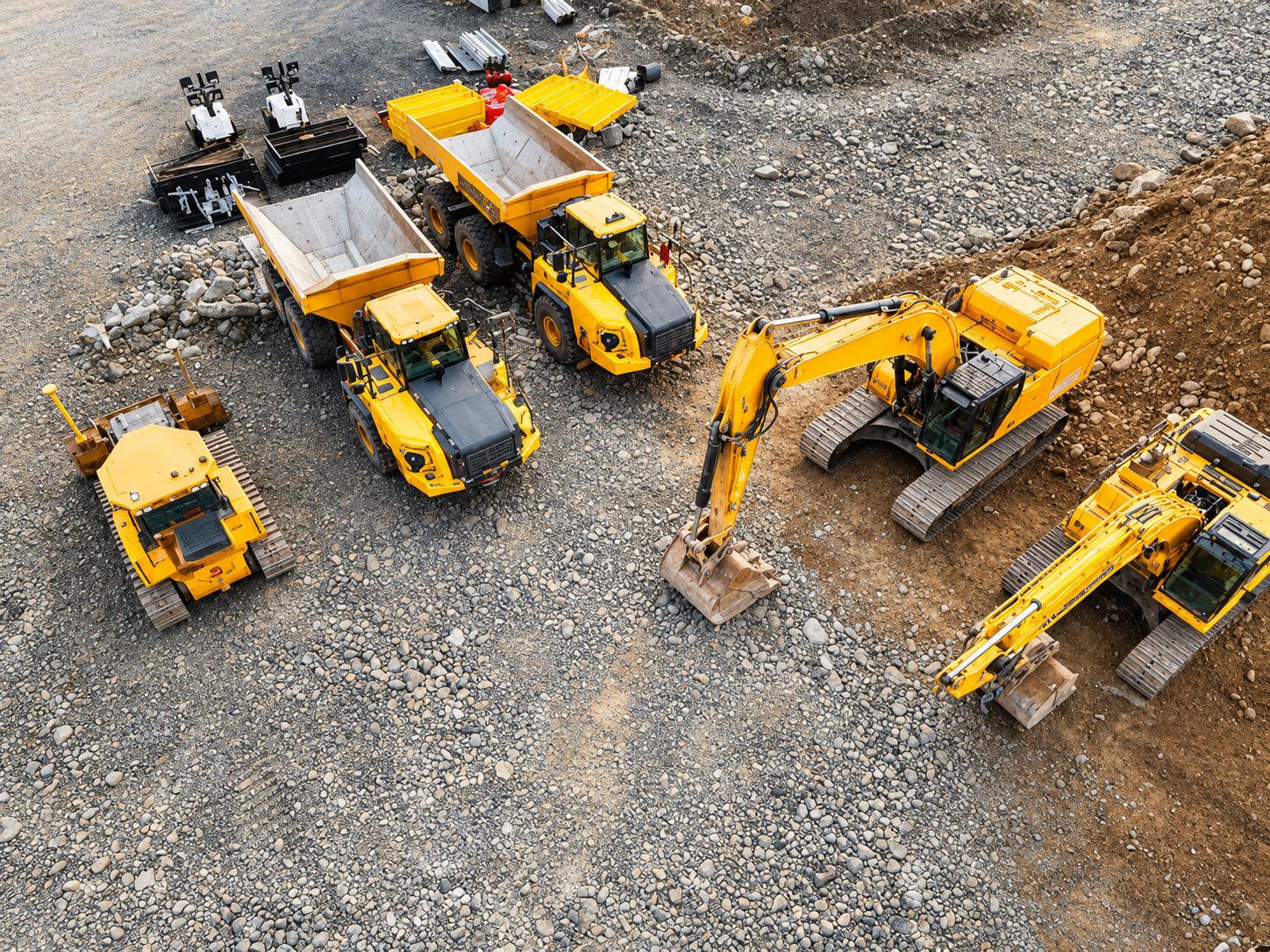
According to the Indian Construction Equipment Manufacturers' Association (ICEMA), domestic construction-equipment sales are projected to reach 126,500–133,500 units in FY2026–27, compared with 113,229 units reported for FY2025–26.
The latest industry figures also indicate that the recovery is gaining momentum.
During July–September 2026 (Q2 FY2026–27), domestic construction-equipment sales increased 23% year-on-year to 29,289 units. The first quarter had already recorded 8% growth.
The important point is where this growth is coming from.
Mining activity, particularly higher iron-ore output, and construction supported by state-government and private-sector investment contributed to the second-quarter improvement. This suggests that demand is not being driven by highway construction alone.
ICEMA's infrastructure-capex projections also point towards a supportive medium-term environment:
- •FY2025–26: ₹25.2 lakh crore (estimated)
- •FY2026–27: ₹27.5 lakh crore (projected)
- •FY2027–28: ₹29.4 lakh crore (projected)
These are industry projections, not guaranteed spending or equipment orders. Actual equipment demand will depend on how quickly projects move from approval and investment into physical execution.
For equipment businesses, that distinction matters. A mining project announcement does not immediately translate into an excavator purchase. Site development, mine preparation, production schedules, material movement and contractor mobilisation all influence when machinery is required.
Sources for market outlook:
- •Autocar Professional – ICEMA Projects Stronger Construction Equipment Demand in H2 FY27 (17 November 2026)
- •The Economic Times – Mining, Industrial Construction to Fuel Construction Equipment Demand Recovery in H2 (17 November 2026)
2. Why Mining and Industrial Construction Matter for Equipment Demand
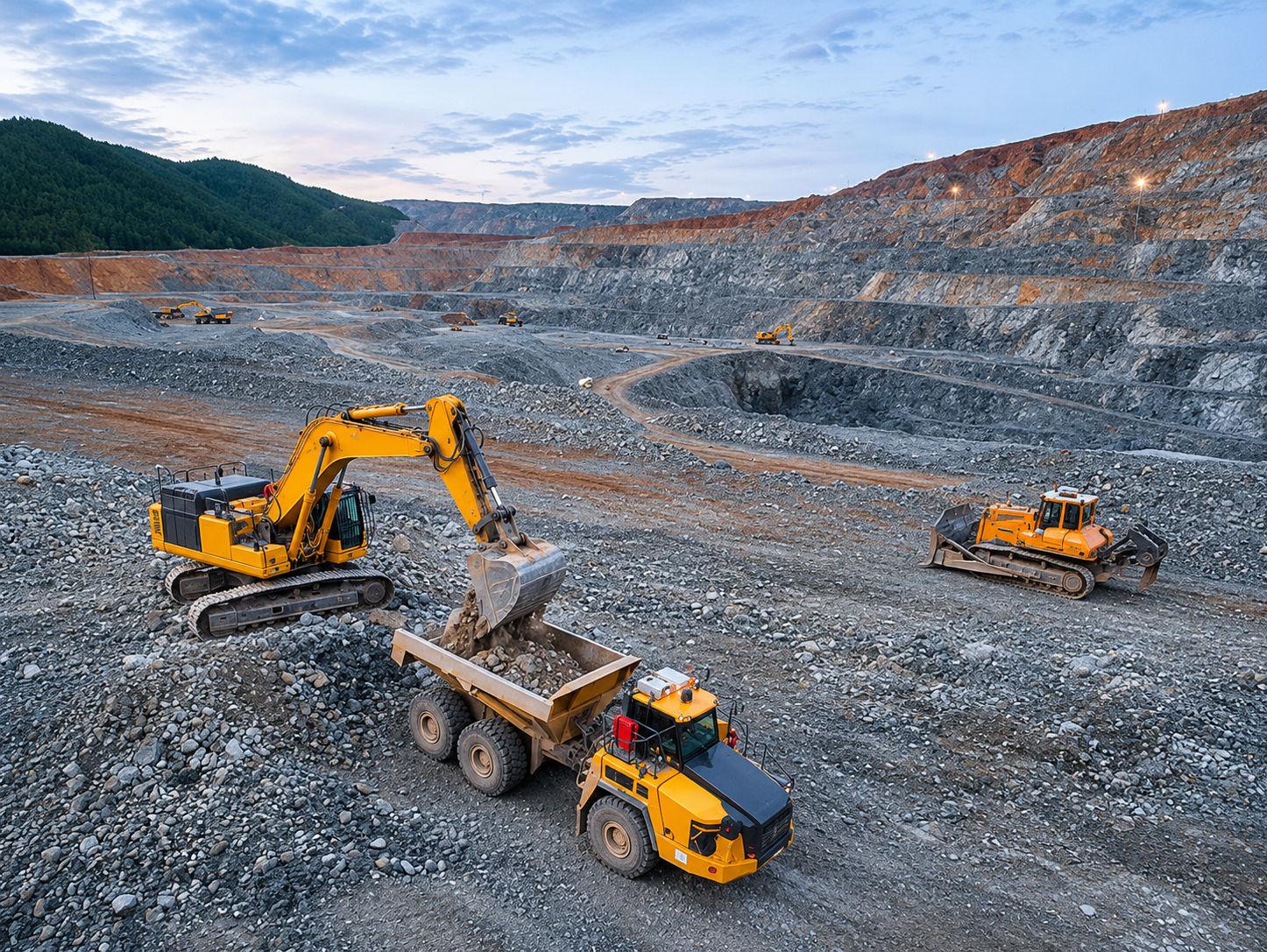
Mining and industrial projects create demand across several stages of work.
Consider an iron-ore mine. Before material can be transported, the site may require land preparation, excavation, overburden removal, loading, hauling, crushing, screening and stockpile management.
An industrial project follows a different sequence. It may require foundation excavation, bulk material movement, structural construction, heavy lifting, concrete placement and internal material handling.
Each activity creates a different equipment requirement.
Three factors are particularly important:
A. Higher Material Movement
Mining and quarrying operations involve continuous movement of soil, rock, ore and overburden. This creates a requirement for excavators, loaders, dozers and suitable haulage systems.
B. Industrial Capacity Expansion
Steel, cement, metals, power and manufacturing projects require equipment for excavation, material handling, lifting, processing and site development.
C. Project Execution and Mobilization
Equipment demand rises when projects reach active construction or production stages. A funded project that has not mobilised contractors may not generate immediate machinery demand.
This is why buyers and dealers should monitor actual project activity rather than relying only on investment announcements.
3. Equipment Categories to Watch in FY2027
The following categories are positioned to serve important mining and industrial applications. This is an application-based assessment, not a claim that every category has a separately published sales-growth forecast.
3.1 Hydraulic Excavators: The Core of Earthmoving Operations
Excavators are used across mine development, quarrying, overburden removal, foundation work and industrial site preparation.
Their suitability depends on the application, not simply the machine's operating weight.
For example:
- •Medium excavators can serve general earthmoving, construction and smaller quarry applications.
- •Higher-capacity excavators may be suitable for demanding bulk excavation and loading operations.
- •Specialised configurations may be required for abrasive materials, continuous-duty applications or difficult ground conditions.
What should buyers evaluate?
- •Operating weight and bucket capacity.
- •Engine power and hydraulic performance.
- •Bucket type and compatibility with the material.
- •Undercarriage durability.
- •Fuel consumption under the expected duty cycle.
- •Service access and spare-parts availability.
A larger excavator is not automatically the most productive option. The right machine must match the required production rate, haulage arrangement and site conditions.
3.2 Wheel Loaders: Keeping Material Moving
Wheel loaders are important in stockyard operations, quarry loading, aggregate handling, plant feeding and industrial material movement.
Their productivity depends on the relationship between bucket capacity, material density, pile characteristics, truck capacity and travel distance.
For example, a loader feeding a crusher needs to maintain a consistent flow of material. If the loader is undersized, the processing plant may remain underfed. If it is oversized, the buyer may incur unnecessary capital and operating costs.
What should buyers evaluate?
- •Rated bucket capacity and material compatibility.
- •Tipping load and operating weight.
- •Breakout force.
- •Tyre selection for the working surface.
- •Cycle time and turning radius.
- •Fuel consumption and service requirements.
The objective is not to buy the biggest loader. It is to maintain the required material flow at an acceptable operating cost.
3.3 Dump Trucks and Haulage Equipment: The Link Between Loading and Production
Excavators and loaders cannot deliver their full potential if the haulage system cannot move material efficiently.
Mining and industrial sites may require articulated dump trucks, rigid dump trucks, tippers or other site-specific haulage solutions.
The choice depends on haul-road conditions, payload, gradients, turning space, distance and operating environment.
One of the most important considerations is fleet matching.
If the excavator loads a truck too quickly but the number of trucks is insufficient, the excavator waits. If too many trucks are deployed, unnecessary queuing and operating costs can arise.
What should buyers evaluate?
- •Payload capacity.
- •Haul-road condition and gradient.
- •Travel distance.
- •Loading and dumping cycle time.
- •Tyre durability.
- •Fuel consumption and maintenance support.
A productive haulage system is a combination of compatible equipment—not simply a collection of high-capacity machines.
3.4 Dozers and Motor Graders: Preparing and Maintaining the Site
Mining and industrial projects require more than excavation and loading.
Dozers are used for pushing material, clearing, spreading, stockpile management and site preparation. Motor graders help maintain haul roads and working surfaces.
Road conditions directly influence truck travel time, tyre wear, fuel consumption and equipment availability.
What should buyers evaluate?
For dozers:
- •Blade type and capacity.
- •Operating weight and traction.
- •Undercarriage configuration.
- •Ground conditions and duty cycle.
For graders:
- •Blade width and operating range.
- •Steering and articulation.
- •Visibility and operator comfort.
- •Suitability for haul-road maintenance.
The correct machine depends on the site task and required level of finish.
3.5 Crushers and Screening Plants: Processing Material at the Source
Excavation and hauling are only part of the operation. In quarrying and aggregate production, material often needs to be crushed and screened into specified sizes.
Crushing and screening plants can be used to process rock and other suitable feed materials into different product sizes.
Typical equipment configurations include:
- •Jaw crushers for primary crushing.
- •Cone crushers for secondary or tertiary crushing in suitable applications.
- •Impact crushers for applications where their crushing characteristics are appropriate.
- •Vibrating screens for separating material into specified size fractions.
What should buyers evaluate?
- •Feed material and maximum feed size.
- •Required output capacity in tonnes per hour (TPH).
- •Desired product size and gradation.
- •Number of crushing and screening stages.
- •Power requirements and site infrastructure.
- •Wear-part consumption and maintenance access.
- •Mobility requirements and relocation frequency.
A plant's advertised capacity should not be treated as guaranteed output. Actual production depends on feed characteristics, moisture, material hardness, crusher configuration, screen efficiency and operating conditions.
It is also important to avoid assuming that material-processing equipment demand is rising at the same rate as earthmoving demand. The latest Q2 FY2026–27 figures reported an 8% decline in material-processing equipment sales. Buyers should therefore assess project-level requirements rather than assume a broad market boom.
3.6 Material-Handling Equipment: Supporting Industrial Operations
Industrial construction and production facilities need equipment to move, lift and position heavy materials.
Depending on the application, this may include pick-and-carry cranes, forklifts, industrial lifting equipment and other material-handling machinery.
Steel, cement, manufacturing, warehousing and infrastructure projects can all create different material-handling requirements.
The Q2 FY2026–27 industry figures reported 43% year-on-year growth in material-handling equipment sales, making this a segment worth monitoring.
What should buyers evaluate?
- •Rated capacity and load chart.
- •Required lifting height and working radius.
- •Site access and ground conditions.
- •Duty cycle and operating environment.
- •Safety systems and inspection requirements.
- •Availability of service and trained operators.
For lifting equipment, capacity must always be assessed against the manufacturer's load chart and the actual operating configuration.
4. What the Latest Segment Numbers Tell Us
The latest Q2 FY2026–27 figures provide a useful indication of where the market is gaining momentum.
| Equipment segment | Q2 FY2026–27 domestic sales | Year-on-year change |
|---|---|---|
| Earthmoving equipment | 20,168 units | +19% |
| Material-handling equipment | 4,412 units | +43% |
| Concrete equipment | 3,149 units | +41% |
| Material-processing equipment | 517 units | -8% |
These numbers are important for three reasons.
First, earthmoving remains the largest segment in the reported Q2 figures. Mining and non-highway construction activity supported this performance.
Second, material handling recorded the strongest growth among the listed segments. This is relevant to industrial construction, steel and cement consumption, and material movement.
Third, material processing did not follow the same growth pattern. This is a reminder that a growing construction-equipment market does not guarantee growth in every equipment category.
For dealers, this makes product-category planning important. For buyers, it reinforces the need to connect machine selection with actual project requirements.
Source for the Q2 segment-wise sales figures: Autocar Professional – ICEMA Projects Stronger Construction Equipment Demand in H2 FY27.
5. How Should Equipment Dealers and Buyers Prepare?
Market growth creates opportunities, but purchasing or stocking equipment based only on a positive forecast can be risky.
A more practical approach is to evaluate demand at the application and project level.
For Equipment Buyers and Contractors
Before purchasing machinery, consider:
- •What material or construction activity will the machine handle?
- •What production rate is required?
- •How many operating hours are expected?
- •Is the machine suitable for the site conditions?
- •What is the total operating cost?
- •Are spare parts and service support available locally?
- •Can the machine be redeployed to another project after completion?
Compare machine specifications and configurations, not only the quoted price.
For Equipment Dealers and Suppliers
Dealers should pay attention to more than overall market growth.
- •Monitor active mining, quarrying and industrial projects in their service regions.
- •Identify the machine categories required at different project stages.
- •Maintain visibility into fast-moving and critical spare parts.
- •Understand the financing requirements of prospective buyers.
- •Build access to trained service personnel.
- •Provide accurate specifications, product documentation and after-sales support.
A market opportunity becomes a business opportunity only when the right equipment is available at the right time, with the required support.
6. What Could Slow Down Equipment Demand?
The outlook is encouraging, but there are important risks.
Project execution delays: Delays in land availability, approvals, funding or contractor mobilisation can postpone equipment purchases.
Financing conditions: Heavy equipment involves significant capital investment. Financing availability and borrowing costs influence buying decisions.
Input and operating costs: Steel, imported components, fuel, tyres, logistics and maintenance affect equipment economics.
Uneven demand across segments: Earthmoving, material handling, concrete and material-processing equipment do not necessarily follow the same demand cycle.
Service and operator availability: Even when a machine is available, insufficient technical support or trained operators can restrict its productive use.
For this reason, the FY2027 outlook should be treated as a market opportunity—not a guarantee of sales or utilisation.
7. The Bigger Opportunity: Matching Equipment to the Project
The next phase of India's construction-equipment market will not be determined by sales volumes alone.
Productivity, operating cost, machine suitability, service support and equipment availability will play an important role in determining which machines deliver value to their owners.
A contractor working on a quarry project may need a different combination of excavators, loaders, dump trucks and processing equipment from a contractor developing an industrial facility.
Similarly, a dealer serving a mining region may need a different product and spare-parts strategy from one serving urban infrastructure projects.
The real opportunity lies in understanding these differences before investing.
8. Find Construction Equipment and Suppliers on MachanX
Looking for construction equipment for mining, quarrying, industrial construction or infrastructure projects?
MachanX helps buyers discover construction equipment and connect with relevant suppliers through its marketplace.
Explore available equipment, compare suitable options and connect with suppliers based on your project requirements.
Explore construction equipment on MachanX and make your next equipment decision with better information.
Frequently Asked Questions
1. Which construction equipment segments are expected to benefit from India's FY2027 demand recovery?
Earthmoving and material-handling equipment are important segments to watch. Mining, industrial construction and non-highway project activity are among the demand drivers. Individual equipment requirements will vary by project.
2. What is the projected construction-equipment sales volume in India for FY2026–27?
ICEMA's November 2026 outlook projects domestic sales of approximately 126,500–133,500 units in FY2026–27.
3. Which equipment is commonly used in mining operations?
Mining operations may use hydraulic excavators, wheel loaders, dozers, dump trucks, graders, crushers and screening plants. The selection depends on the mineral, material characteristics, mine layout and production target.
4. Why are wheel loaders important in mining and industrial projects?
Wheel loaders support material loading, stockpile management, plant feeding and movement of bulk materials. Their productivity depends on bucket capacity, material density, travel distance and cycle time.
5. What should buyers check before purchasing a crusher or screening plant?
Buyers should evaluate feed size, material hardness, required TPH, output gradation, crusher configuration, screen capacity, power requirements, wear parts and maintenance access.
6. Is construction-equipment demand growing equally across all categories?
No. The Q2 FY2026–27 figures show different growth rates across earthmoving, material handling, concrete and material-processing equipment. Buyers and dealers should assess the relevant segment rather than rely on overall industry growth alone.
7. How can contractors select the right equipment for an industrial project?
Start with the project scope, material characteristics, required output, operating conditions, machine utilisation, service availability and total operating cost. Compare equipment configurations against these requirements before purchasing.
Sources & References
The market statistics and industry outlook in this article are based on the ICEMA Construction Equipment Demand Report, developed with CRISIL, and published industry coverage.
1. Autocar Professional – ICEMA Projects Stronger Construction Equipment Demand in H2 FY27
Published: 17 November 2026
Supports the Q2 FY2026–27 domestic sales figures, segment-wise performance and full-year domestic sales projections.
2. The Economic Times – Mining, Industrial Construction to Fuel Construction Equipment Demand Recovery in H2
Published: 17 November 2026
Supports the FY2026–27 and FY2027–28 domestic sales outlook, infrastructure capital expenditure projections and mining and industrial construction demand outlook.
3. ICEMA – Official Industry Data Reports
https://www.i-cema.in/icema-data-reports/
Reference for ICEMA's construction-equipment industry data and segment classification.
Data period: Q2 FY2026–27 (July–September 2026).
Editorial note: Sales figures represent reported domestic equipment sales. Growth percentages are year-on-year comparisons. Full-year sales and infrastructure investment figures are projections, not confirmed outcomes. Equipment-category discussions in this article are application-based analysis and should not be interpreted as individual segment sales forecasts.